
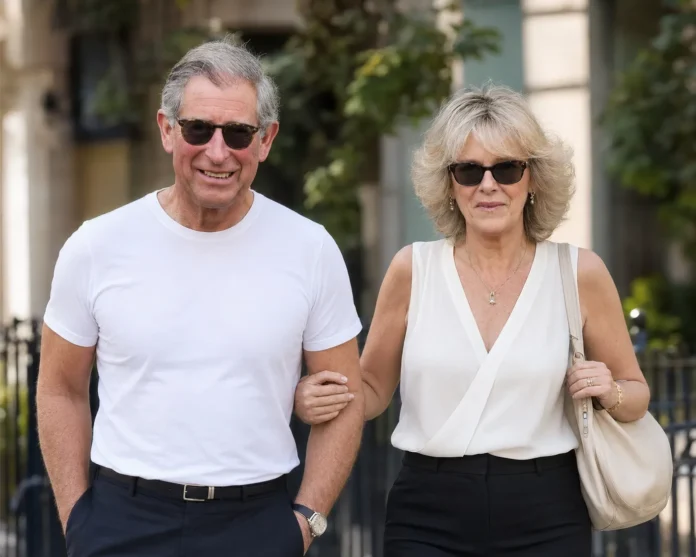
The Charles and Camilla wedding remains one of the most discussed moments in modern British royal history. When Prince Charles and Camilla Parker Bowles married on April 9, 2005, the event marked the culmination of a relationship that had faced decades of public scrutiny, royal protocol challenges, and intense media attention.
Unlike traditional royal weddings held in grand church ceremonies, their marriage took place in a civil ceremony at Windsor Guildhall, followed by a religious blessing at St. George’s Chapel in Windsor Castle. The wedding balanced royal tradition with a modern approach, reflecting both the couple’s personal journey and changing attitudes within the monarchy.
How Charles and Camilla’s Relationship Led to Marriage
A Relationship That Spanned Decades
Prince Charles and Camilla first met in the early 1970s and developed a close relationship long before their eventual marriage. Over the years, both married other partners and built separate families, but their connection remained a significant part of their lives.
The public became increasingly aware of their relationship during the 1990s, particularly after the breakdown of Charles’s marriage to Princess Diana. As media attention intensified, the couple faced considerable criticism and public debate about their future together.
By the early 2000s, attitudes had begun to shift. Camilla gradually appeared alongside Charles at public events, and her role within royal life became more visible. Their engagement was officially announced in February 2005.
Why the Wedding Was Considered Historic
The marriage was significant because both Charles and Camilla had previously been divorced. At the time, questions arose about how the future king could remarry while maintaining his role within the Church of England.
Royal advisers, church officials, and constitutional experts carefully considered the legal and religious aspects of the marriage. Eventually, a civil ceremony followed by a religious blessing was chosen as the most appropriate solution.
The wedding became an important milestone for the monarchy, demonstrating how royal traditions could adapt to modern circumstances while respecting constitutional and religious considerations.
The Wedding Day: April 9, 2005
The Civil Ceremony at Windsor Guildhall
The couple married at Windsor Guildhall on April 9, 2005. The wedding had originally been scheduled for April 8 but was postponed by one day so Charles and several dignitaries could attend the funeral of Pope John Paul II.
The ceremony itself was intentionally modest by royal standards. Rather than the elaborate spectacle often associated with royal weddings, the event was relatively private and attended by a limited group of family members and close friends.
Prince William served as one of the witnesses for his father, while Tom Parker Bowles acted as a witness for his mother. The setting reflected the couple’s desire for a dignified but understated occasion.
Why Queen Elizabeth II Did Not Attend
One of the most talked-about aspects of the wedding was the absence of Queen Elizabeth II and Prince Philip from the civil ceremony.
Buckingham Palace explained that the Queen respected the couple’s wish to keep the event low-key. Instead of attending the registry ceremony, she joined the family later for the religious blessing and reception.
Her decision generated widespread discussion at the time, with many commentators interpreting it as an effort to maintain a distinction between the civil marriage and the subsequent religious service.
The Service of Prayer and Dedication
Following the legal ceremony, Charles and Camilla traveled to St. George’s Chapel in Windsor Castle for a televised Service of Prayer and Dedication led by Archbishop of Canterbury Rowan Williams.
Around 800 guests attended the service, including senior members of the royal family. During the ceremony, the couple participated in prayers and readings that received significant media attention due to their emphasis on repentance and commitment.
The blessing allowed the marriage to receive a religious acknowledgment while remaining consistent with Church of England guidelines concerning remarriage.
Camilla’s Wedding Outfit and Style
A Non-Traditional Royal Bridal Look
Camilla’s wedding fashion stood apart from the grand bridal gowns often associated with royal weddings.
For the civil ceremony, she wore an ivory silk chiffon dress and matching coat designed by Anna Valentine and Antonia Robinson. Instead of a royal tiara, she chose a dramatic feathered hat created by renowned milliner Philip Treacy.
The choice reflected her preference for elegance rather than extravagance. It also helped distinguish the event from traditional state-style royal weddings.
Her Second Outfit for the Blessing Service
After the civil ceremony, Camilla changed into a second ensemble for the religious blessing.
The outfit featured a blue chiffon gown paired with a blue-and-gold embroidered coat. She again chose a Philip Treacy headpiece rather than a tiara, reinforcing the understated tone of the occasion.
The look received praise from fashion commentators for blending royal sophistication with modern style. Years later, several elements of her wedding wardrobe continued to attract attention, particularly during anniversary celebrations.
Royal Family Reactions and Public Response
Support From William and Harry
Princes William and Harry both attended the wedding and played visible roles throughout the day.
Their participation was viewed as an important sign of family support during a period when public feelings about the relationship remained mixed. William’s role as a witness underscored his support for his father’s decision to remarry.
The wedding occurred less than eight years after the death of Princess Diana, making the event emotionally significant for many observers and members of the royal family alike.
Public Opinion at the Time
Public reaction to the marriage was complex. Some people viewed the wedding as a long-overdue recognition of a relationship that had endured for decades. Others remained critical due to the history surrounding Charles and Diana’s marriage.
Despite the divided opinions, the ceremony was widely watched and generated significant international coverage. Crowds gathered in Windsor to celebrate the occasion, and many royal observers noted that the day represented a turning point in Camilla’s public acceptance.
How the Wedding Changed Camilla’s Public Role
After the marriage, Camilla became the Duchess of Cornwall and gradually took on a larger role within royal life.
Over the following years, she became one of Charles’s most visible supporters during official engagements and international tours. Public attitudes softened considerably, and her position within the royal family became increasingly established.
The wedding ultimately laid the foundation for her future role as Queen Consort and later Queen Camilla following Charles’s accession to the throne in 2022.
Lasting Legacy of the Charles and Camilla Wedding
A Modern Royal Milestone
Looking back, the wedding represented a major moment in the evolution of the British monarchy. It demonstrated that royal traditions could adapt to contemporary realities while preserving important ceremonial elements.
The blend of a civil marriage and religious blessing created a model that balanced constitutional requirements, church guidance, and personal circumstances.
The event also showed how public perceptions can change over time, particularly when viewed through the lens of decades rather than headlines.
Celebrating More Than Two Decades Together
Since their marriage, Charles and Camilla have experienced many historic milestones together, including royal tours, family celebrations, the passing of Queen Elizabeth II, and the coronation of King Charles III and Queen Camilla in 2023.
Their relationship has evolved from one of the monarchy’s most controversial stories into one of its most enduring partnerships. Anniversary celebrations continue to draw public interest, reflecting how dramatically perceptions have changed since their wedding day. Similar generational transitions and modernization efforts are unfolding in other European monarchies, including the Spanish royal family under King Felipe VI.
Frequently Asked Questions
Q: When did Charles and Camilla get married?
A: Prince Charles and Camilla Parker Bowles married on April 9, 2005. The wedding took place at Windsor Guildhall in Berkshire, England, followed by a religious blessing at St. George’s Chapel in Windsor Castle.
Q: Why was the wedding a civil ceremony?
A: Because both Charles and Camilla had been previously divorced, a civil ceremony was chosen for the legal marriage. A separate religious Service of Prayer and Dedication was then held at St. George’s Chapel to provide a church blessing.
Q: Did Queen Elizabeth II attend the wedding?
A: Queen Elizabeth II did not attend the civil ceremony at Windsor Guildhall. However, she attended the Service of Prayer and Dedication afterward and hosted a reception for the newlyweds at Windsor Castle.
Q: What did Camilla wear on her wedding day?
A: Camilla wore an ivory silk outfit with a feathered Philip Treacy hat for the civil ceremony. For the religious blessing, she changed into a blue-and-gold embroidered ensemble with another distinctive headpiece.
Q: Where was the Charles and Camilla wedding held?
A: The legal marriage ceremony was held at Windsor Guildhall, while the Service of Prayer and Dedication took place at St. George’s Chapel within Windsor Castle. Both venues are located in Windsor, England.
Conclusion
The Charles and Camilla wedding was far more than a royal ceremony. It marked the culmination of a relationship that had endured public controversy, personal challenges, and decades of scrutiny. By choosing a civil ceremony followed by a religious blessing, the couple found a path that balanced royal tradition with modern realities.
More than twenty years later, the wedding remains a defining moment in British royal history. What began as a closely watched and sometimes controversial event has come to symbolize resilience, commitment, and the monarchy’s ability to adapt. For royal watchers, it remains one of the most significant and fascinating weddings of the modern era.
Read more about: Vanderpump Family: The Story Behind Lisa Vanderpump’s
Read more about: Spanish Royal Family: History, Members, and Modern Role
Read more about: Princess Diana Piercing: Meaning, Origin, Healing, and Facts
Read more about: Bob Mortimer Wife: Inside His Marriage to Lisa Matthews
Read more about: Joe Marler Wife: Inside His Marriage to Daisy Marler
Read more about: Ashton Kutcher Net Worth in 2026: How Rich Is He Today?